Climate change impacts are accelerating and so are the health risks. Yet some face far greater health risks than others. The European Climate-Health Cluster has released its second Policy Brief, Uneven Ground, to show these impacts through the lens of the most vulnerable to inform fair and effective climate policies. How can we protect the people and regions most at risk?
Download the Policy Brief to find out more
Rising temperatures, extreme weather events, declining air quality, and the shifting spread of infectious diseases disproportionately harm those already experiencing social and economic disadvantage. Older people, children, pregnant women, low-income communities, migrants, outdoor workers, and people with chronic illnesses or disabilities are among those facing the greatest risks with fewest resources to respond.
In response, we have synthesised evidence from across Europe to understand how these climate impacts interact with social, economic, and geographic vulnerabilities.
 Fair and effective climate policies
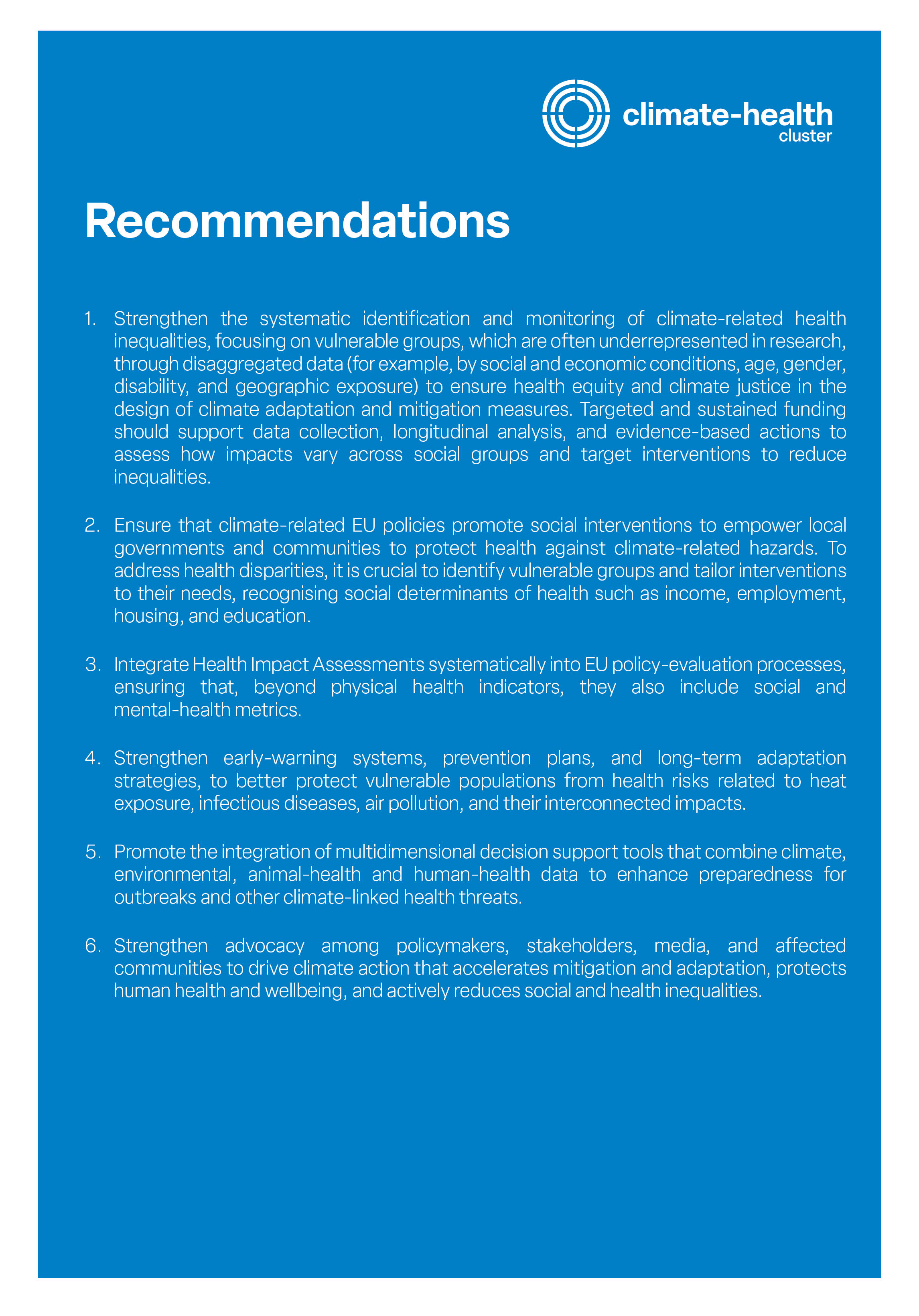 Fair and effective climate policies
Climate change is already widening Europe’s health divide. With better data, tailored interventions, and equitable climate action, policymakers can work to protect the most vulnerable while also strengthening resilience across all regions.
Vania Putatti, Policy Coordinator at EuroHealthNet, said: “Climate change is no longer just an environmental challenge — it is a public health crisis that is widening inequalities across Europe. Climate adaptation policies must respond to this uneven ground, with concrete and timely actions to protect those most exposed.”