
Recommendations and the recording from the BlueAdapt Final Conference
The BlueAdapt conference called ‘Climate change & health: building resilience and reducing risks in coastal environments’, recently took stock of the project’s research on how waterborne pathogens and pollution in coastal waters impact human health.
>> Watch the recording here: https://www.youtube.com/live/kVQVPBkwlEw?si=HCnPgX9XEhgYSh95
System-based solutions for coastal resilience
With an eye on how the scientific findings can guide EU and national policy on water and climate resilience, discussions looked towards practical and systems-based solutions:
- The benefit of healthy waters for human health goes far beyond disease prevention. Systematically integrating health and environmental policies enhances the foundations for healthy societies, wellbeing and economic resilience. A One Health approach that carefully considers the subtle interconnections between the human and natural world can provide an overarching vision to achieve this.
- We have strong scientific evidence on how human behaviours influence ocean health. What is now needed are tools, resources and guidelines to empower local communities and regional authorities to adapt and mitigate the harms from climate change.
- Individuals must also be empowered to be able to make informed decisions to protect their health. Tailoring risk communication to different groups and investing in education and societal awareness increases knowledge of how to safely engage in coastal activities, as well as support for mitigation and adaptation measures.
- We need routine monitoring of bathing waters to capture real-time data, and increased ad-hoc monitoring for extreme weather periods and for organised recreational events. We also need to go beyond monitoring to explicitly include anticipation in adaptation and mitigation efforts.
By applying mitigation, adaptation and education measures together, Europe can create more resilient and healthy blue environments for everyone to enjoy.
Why is this climate-health issue so important?
A systemic approach to protect coastal environments is necessary for healthy communities to thrive.
Coastal environments are becoming increasingly important as people seek places to stay cool, improve their wellbeing, and connect with nature during warmer summers. While climate change is reshaping these valuable blue spaces, it also presents an opportunity to better understand and manage the risks that come with a changing environment. By bringing together expertise from health, environmental, and marine sectors, we can develop innovative solutions that help communities enjoy the benefits of coastal waters safely. In doing so, we can protect public health, support thriving coastal economies, and build resilience for the future while ensuring that these cherished spaces remain accessible for generations to come.
Europe must take coordinated action to mitigate and adapt to the risks posed by waterborne pathogens. In her State of the European Union address, European Commission President Ursula Von der Leyen announced a new European water initiative to protect industry and food security from water scarcity. The European Commission will launch a Climate Resilience Framework this year to support Member States in climate preparedness. These initiatives must integrate health and social wellbeing across policy areas, as Europe and its economy cannot thrive without a resilient society at its core.
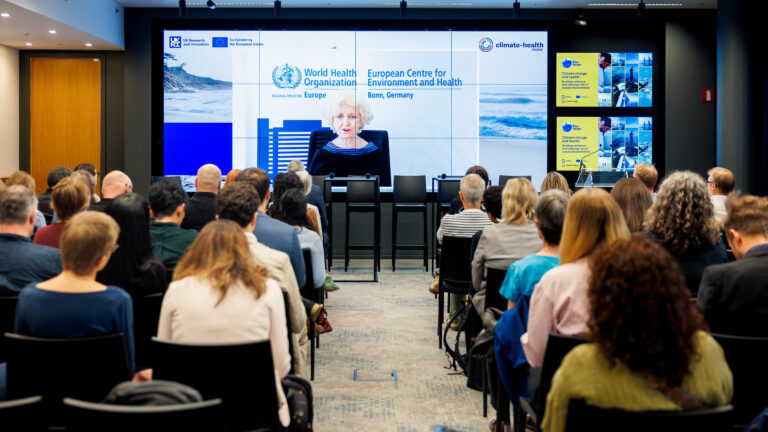
The EU has defined its priorities over the next years as security, defence, and competitiveness. But within these overarching themes, climate and health policies can play a key role in protecting Europe’s future. Climate-related damages cost the EU €50 billion a year, hindering our ability to invest in innovation. Blue environments are central for economic resilience, but extreme climate events, such as heatwaves and flooding, lead to long-term illnesses and reduce our economic activity.
Building coastal resilience is not just about addressing physical hazards, such as rising sea levels and flooding. We must also work to protect people’s livelihoods. By centring health and wellbeing in climate and environmental policy, we also boost Europe’s economic competitiveness.” Marc Neumann, BlueAdapt Project Coordinator and Research Professor at the Basque Centre for Climate Change (BC3).
Read BlueAdapt’s wider reflections from the Final Conference Highlights here: https://blueadapt.eu/news/bringing-climate-health-and-coastal-resilience-together-reflections-from-the-blueadapt-final-conference/