
Taking LCAT to Paris: Connecting Climate Adaptation with Real‑World Action
BlueAdapt asked Research Fellow Helen Underhill to share highlights from the team’s recent visit to Paris for the British Council’s Study UK Alumni Awards. Here’s her story:
Over the past few years, the Local Climate Adaptation Tool (LCAT) has steadily grown from a regional pilot project into a nationally available resource, supporting people across the UK to better understand climate change risks and, crucially, what they can do about them. As part of BlueAdapt, my role is focused on stakeholder engagement. I work closely with users of the tool to understand how they use it, what they need from it, and how we can continue to improve it.
[Text Wrapping Break]Recently, that work took me and my colleague Tom Wilson to Paris, where we had the opportunity to introduce LCAT to a new and enthusiastic audience. It was an inspiring reminder of why accessible, evidence-based climate adaptation tools matter so much.
A short introduction to LCAT
Rather than just presenting raw climate data, LCAT helps people understand risk, vulnerability, and adaptation measures in an integrated way. It looks at how different climate hazards interact with social and environmental vulnerabilities, and it leads users through to practical adaptation options, supported by case studies and evidence.
Importantly, the tool is designed for a wide range of people. Local authorities, NHS professionals, community organisations, and members of the public all use LCAT to support decision-making, funding bids, planning processes, and community engagement. You don’t need to be a climate scientist to use it, and that accessibility is one of its greatest strengths.
Why Paris?
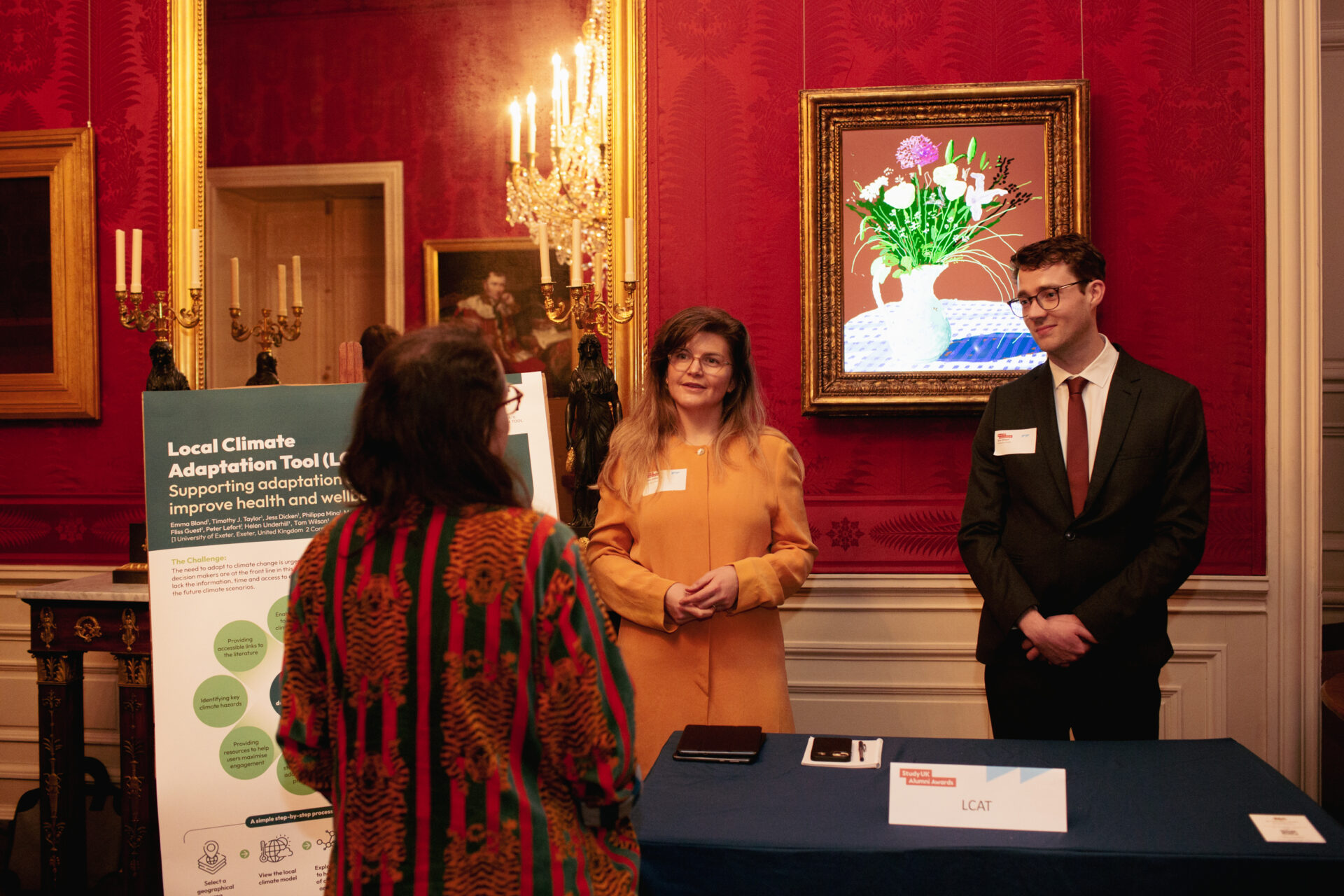
In late 2025, Tom and I were invited to attend the British Council’s Study UK Alumni Awards, held at the British Ambassador’s Residence in Paris. The event brought together alumni from UK universities who are now living and working in France, many of whom are leaders in sectors linked to science, sustainability, policy, finance, and innovation.
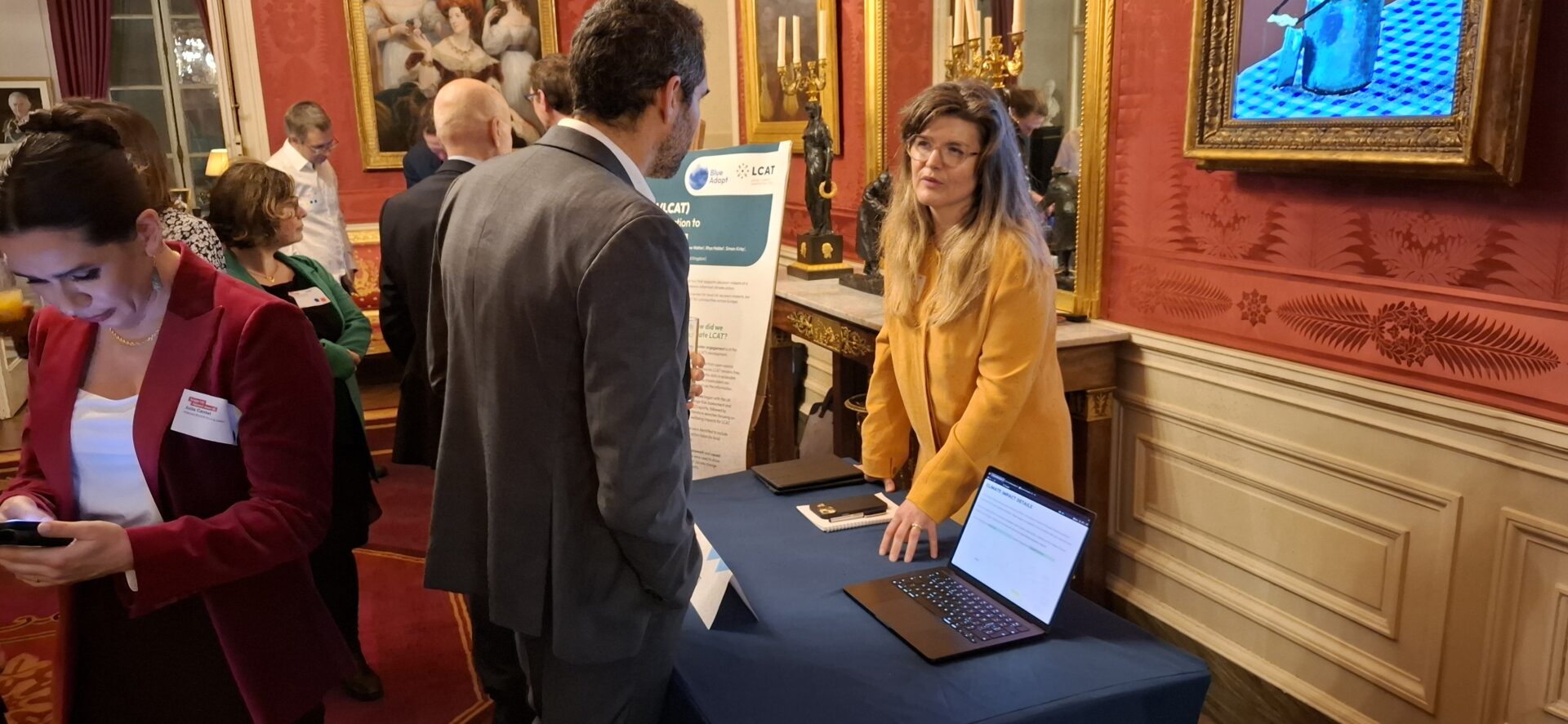
LCAT featured in the event’s Innovation Hallway, where UK universities showcased research and tools with global relevance. We spent the evening speaking with attendees, demonstrating LCAT, and hearing firsthand how people working across different disciplines are thinking about climate adaptation.
The setting itself was impressive, but what really stood out were the conversations. As Tom observed at the time, face-to-face discussions create a space for curiosity and connection that is hard to replicate online. People were keen not just to see what LCAT does, but to explore how it could fit into their own professional contexts.
What we learned from the conversations
One of the most striking themes was demand. People asked us: “When can we use this in France?” That question came from academics, policymakers, and professionals in sectors such as finance and infrastructure.
Tom had several fascinating conversations with people working in banking and finance, where much of the focus has traditionally been on climate mitigation. However, there was growing recognition that adaptation is no longer optional, it is becoming essential for long-term resilience and risk management. Tools like LCAT resonated because they help bridge the gap between climate science and operational decision-making.
I was also struck by how strongly people felt connected to the University of Exeter. Many attendees spoke warmly about their time there, and that sense of trust and credibility carried through into conversations about the tool. That matters, because effective climate communication depends not only on data, but on relationships and confidence in the sources of information.
Why this kind of engagement matters
Events like this reinforce something we see time and again in our work: how climate change is communicated is just as important as what is communicated. Tom articulated this well during our reflections after the event. He said that climate information has to be relatable, grounded in people’s lived experience, and not relentlessly framed in terms of catastrophe.
LCAT is deliberately designed to avoid a purely “doom and gloom” narrative. While it does not shy away from the seriousness of climate risks, it also emphasises that adaptation is possible. More than that, many adaptation measures can actually make everyday life better, not worse.
That balance between urgency and hope is something I believe is central to good climate communication. People need to understand what is at stake, but they also need to see pathways towards a future that is not defined solely by crisis.
Looking ahead
Our time in Paris made it clear that LCAT speaks to challenges that extend well beyond the UK. Climate impacts may vary by place, but the need for accessible, evidence-based adaptation tools is shared across borders and sectors.
For me, the event was a reminder of why stakeholder engagement is so vital. Tools like LCAT only succeed if they are shaped by the people who rely on them. Conversations, questions, and even moments of curiosity in a crowded embassy hallway all contribute to that process.
As climate risks intensify, creating spaces where people can understand, discuss, and act on adaptation is more important than ever. Paris was just one stop along that journey, but it was a valuable and energising one.